

Auto Auction Transport Services
Buying a vehicle at auction is often the easy part. Once the bidding ends, someone still has to get the vehicle out of the auction yard and to your home, dealership, shop or other destination.
Heights Transport Solutions coordinates auction vehicle transport for dealerships, wholesalers, collectors, private buyers and businesses purchasing one vehicle or multiple units.
Transport From Online and In-Person Auto Auctions

Auction transport can involve everything from everyday inventory purchased through large wholesale or salvage auctions to classics and collector vehicles purchased at specialty events.
Customers may need vehicles picked up from auctions such as Manheim, Copart, IAA, ADESA, Mecum, Barrett-Jackson, GAA and other auction facilities.
The transportation process is similar whether you bought one car for yourself or several vehicles for dealership inventory. The biggest difference is usually how much coordination is involved.
Auction Release Comes Before Pickup
Winning the vehicle does not necessarily mean a carrier can immediately drive through the gate and load it.
The auction may require payment clearance, a buyer number, lot number, gate pass, release authorization or other pickup information before the vehicle can leave the property.
Heights coordinates the required pickup details with the customer and auction so the carrier has the information needed when arriving at the facility.
Private buyers in particular may never visit the auction themselves, so release paperwork and accurate contact information become especially important.
Pickup Deadlines Can Matter
Many auctions allow only a limited amount of time after a sale before storage charges or other fees may begin.
That makes timing one of the most important parts of auction transport. Heights needs to know the auction's pickup deadline as early as possible so carrier scheduling can be planned around it.
The auction itself also controls when the vehicle is actually available. Even with a carrier ready to move, transport cannot begin until payment, paperwork and release authorization are complete.
In fact, release approval is often a bigger source of delay than the transportation itself.
Running and Non-Running Auction Vehicles
Auction purchases do not always arrive in ready-to-drive condition. Some vehicles may have mechanical problems, collision damage or simply may not run.
Tell Heights whether the vehicle is operable when requesting transport. A non-running vehicle may require a winch, forklift assistance or other loading arrangements depending on its condition and the auction facility.
The more accurately we know what is waiting at the auction, the easier it is to send equipment capable of actually loading it instead of discovering an unpleasant mechanical surprise at the gate.
Open or Enclosed Auction Transport
Most standard auction vehicles can be transported using open auto transport. It is generally the more economical choice and works well for dealership inventory, project vehicles and ordinary passenger vehicles.
For a classic, collector, luxury or especially valuable auction purchase, enclosed auto transport may be worth considering for additional protection from weather and road debris.
One Vehicle or Several
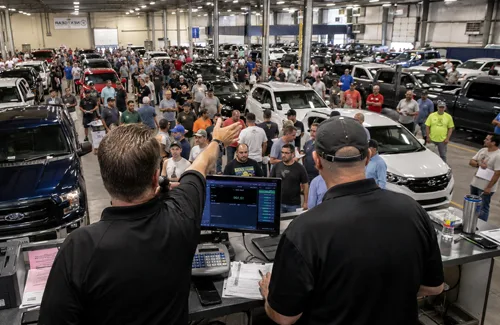
Dealerships and resellers may purchase several vehicles from the same auction or from multiple locations.
Heights can coordinate multiple units when possible, taking into account where the vehicles are located, when each is released and what type of trailer is appropriate.
For businesses buying vehicles regularly, transportation can become part of the inventory process rather than a separate scramble after every sale.
How Auction Vehicle Transport Works
We begin with the vehicle information, auction location, destination, operating condition and pickup deadline.
Once the auction release information is available, Heights coordinates a carrier suited to the vehicle and route. When a carrier accepts the shipment, we provide the carrier, dispatcher and driver information along with estimated pickup and delivery dates.
At pickup, the carrier follows the auction's check-in and release procedures, inspects the vehicle and documents its condition before loading. The vehicle is inspected again at delivery.
During transport, Heights remains involved with communication between the customer, carrier and other parties when timing or shipment details change.
What Auction Transport Costs
Cost depends on the distance, vehicle size, operating condition, transport method, route and how quickly the auction requires the vehicle to be removed.
A tight pickup deadline can increase cost because there is less time to find a carrier already traveling the route. Vehicle size, special loading requirements and choosing enclosed rather than open transport can also affect the rate.
For a broader explanation of transportation pricing, see what affects auto shipping cost.
Frequently Asked Questions
Pickup timing depends on when the auction releases the vehicle, the route and carrier availability. If the auction has a firm pickup deadline, give Heights that date as early as possible so transportation can be planned around it.
We typically need the auction location, vehicle information, destination, operating condition and any release details required by the auction. That may include a buyer number, lot number, gate pass or release authorization.
Often, yes. Non-running auction vehicles may require a winch, forklift assistance or other loading arrangements. Tell Heights the vehicle's condition before transport so the appropriate carrier and equipment can be arranged.
We can coordinate transport around the auction's pickup deadline, but the vehicle must be paid for and released before the carrier can remove it. Providing the deadline and release information early gives us the best chance to schedule pickup before additional storage charges begin.
Usually not. Many auction vehicles are picked up without the buyer being present. The important part is making sure the auction has released the vehicle and the carrier has the correct pickup information and authorization.
Yes. Heights can coordinate multiple vehicles from the same auction or from different locations when practical. Scheduling depends on when each vehicle is released, where it is going and what type of carrier is appropriate.